As we grow older, it’s natural to lose muscle mass. In fact, adults can lose between 3% and 8% of their muscle each decade after age 30, with the rate increasing after age 60. The good news is that regular strength training can slow—and even reverse—much of that loss.
 
Strength training doesn’t require expensive gym memberships or heavy weights. Resistance bands, light dumbbells, or even bodyweight exercises performed two or three times each week can help improve muscle strength, balance, and flexibility.
 
Maintaining muscle strength supports everyday activities such as climbing stairs, carrying groceries, getting out of a chair, and enjoying hobbies. It also helps protect bones by reducing the risk of osteoporosis and may lower the chances of falls, one of the leading causes of injury among older adults.
 
Before beginning a new exercise program, talk with your healthcare provider, especially if you have chronic health conditions. Starting slowly and focusing on proper form is far more important than lifting heavy weights.
 
Simple exercises such as wall push-ups, seated leg lifts, chair squats, and resistance-band rows are excellent places to begin. Many community centers and senior fitness programs also offer classes specifically designed for older adults.
 
The goal isn’t becoming an athlete—it’s maintaining the independence to continue doing the things you enjoy.
 
Healthy Aging Tip: Even 20 to 30 minutes of strength exercises twice a week can make a meaningful difference in your mobility, confidence, and overall quality of life.
 
Dale Koch, Director
Aging Information Committee
01
Content Generated with AI...

...with Edits and Modifications

At NCRO, we are proud to uphold the highest standards of accuracy and quality in all our content. Our articles are meticulously crafted by advanced AI technology, rigorously reviewed, and approved by our dedicated NCRO committees before being shared on our website. This thorough process ensures that our readers receive reliable and credible information they can trust.
122 views
0 FacebookLinkedinCopy LinkEmail

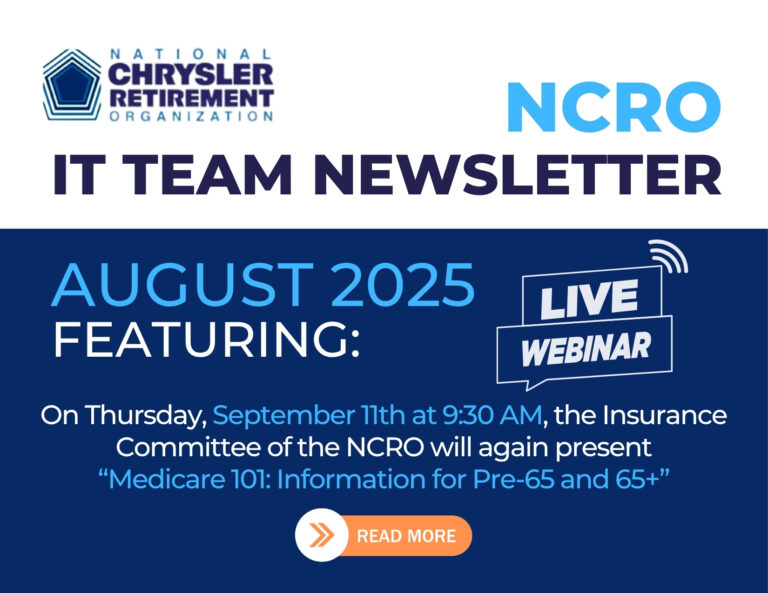
Every fall, millions of retirees are faced with important Medicare decisions. Even if you’ve been enrolled for years, annual changes to premiums, prescription drug plans, Medicare Advantage plans, and supplemental coverage can affect both your healthcare and your budget.

That’s why the NCRO Insurance Committee presents its annual Medicare 101 educational webinar—to help retirees make informed decisions before Medicare Open Enrollment begins.

Who Should Attend?

This free webinar is valuable for:

  • Retirees ages 62–64 preparing for Medicare.
  • Spouses who will soon become Medicare eligible.
  • Current Medicare participants who want to better understand their coverage.
  • Anyone wanting to learn more about retiree healthcare benefits.

What You’ll Learn

Our presenters will discuss:

  • Social Security basics
  • Medicare Parts A & B
  • Medicare Advantage vs. Medicare Supplement (Medigap)
  • Medicare Part D prescription drug plans
  • Retiree Health Care Accounts (RHCA)
  • Healthcare Retirement Accounts (HRA)
  • Via Benefits Accounts (VBA)
  • Resources available to help with your healthcare decisions
  • Live Questions & Answers

Event Details

Thursday, September 24
9:30 AM – 12:30 PM EDT

Please click on this link to register for the WEBINAR.

Registration is free, but advance registration is required.

After registering, you’ll receive a confirmation email with instructions for joining the webinar.

Whether you’re approaching Medicare eligibility or reviewing your current coverage before Open Enrollment, this webinar can help you better understand your options and prepare for the upcoming enrollment season.

108 views
0 FacebookLinkedinCopy LinkEmail

Important Phone Numbers and Addresses

  • Medicare 1-800-medicare or 1-800-633-4227
  • MAPP 1-800-803-7174 Michigan Medicare Medicaid Assistance Program (also called SHIP in other states)
  • SHIP go to www.medicare.gov search for SHIP (State Health Insurance Program same as MMAP in Michigan)
  • Benefit Connect 1-888-409-3300
  • Via Benefits: (800) 953-5395
  • Merrill Lynch: (800) 483-7283
  • Social Security 1-800-772-1213

Internet

8.2K views
1 FacebookLinkedinCopy LinkEmail

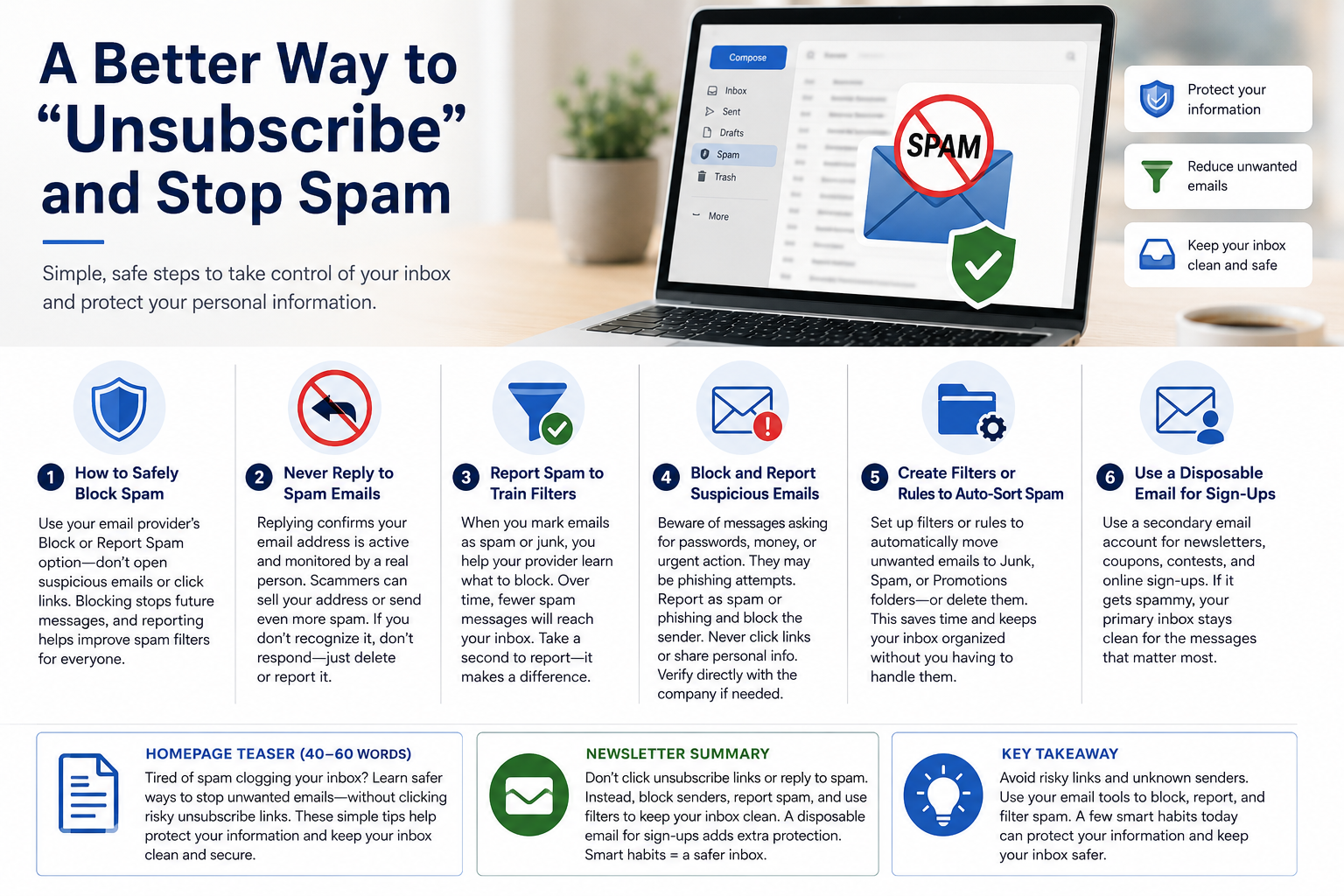
If your inbox seems more crowded every day, you’re not alone. Spam emails have become increasingly sophisticated, making it harder to tell the difference between legitimate messages and scams. While clicking the “Unsubscribe” link may seem like the quickest solution, it’s not always the safest choice.

Many legitimate companies honor unsubscribe requests, but cybercriminals often include fake unsubscribe links to trick recipients into clicking. These links can confirm that your email address is active, direct you to fraudulent websites, or even attempt to install malicious software. Before taking any action, ask yourself one simple question: Do I recognize and trust the sender?

Cybersecurity experts recommend using safer methods to reduce unwanted email while protecting your personal information. The good news is that Gmail and most other email providers include built-in tools that can help you manage unwanted messages without putting your privacy at risk.

How to Safely Block Spam

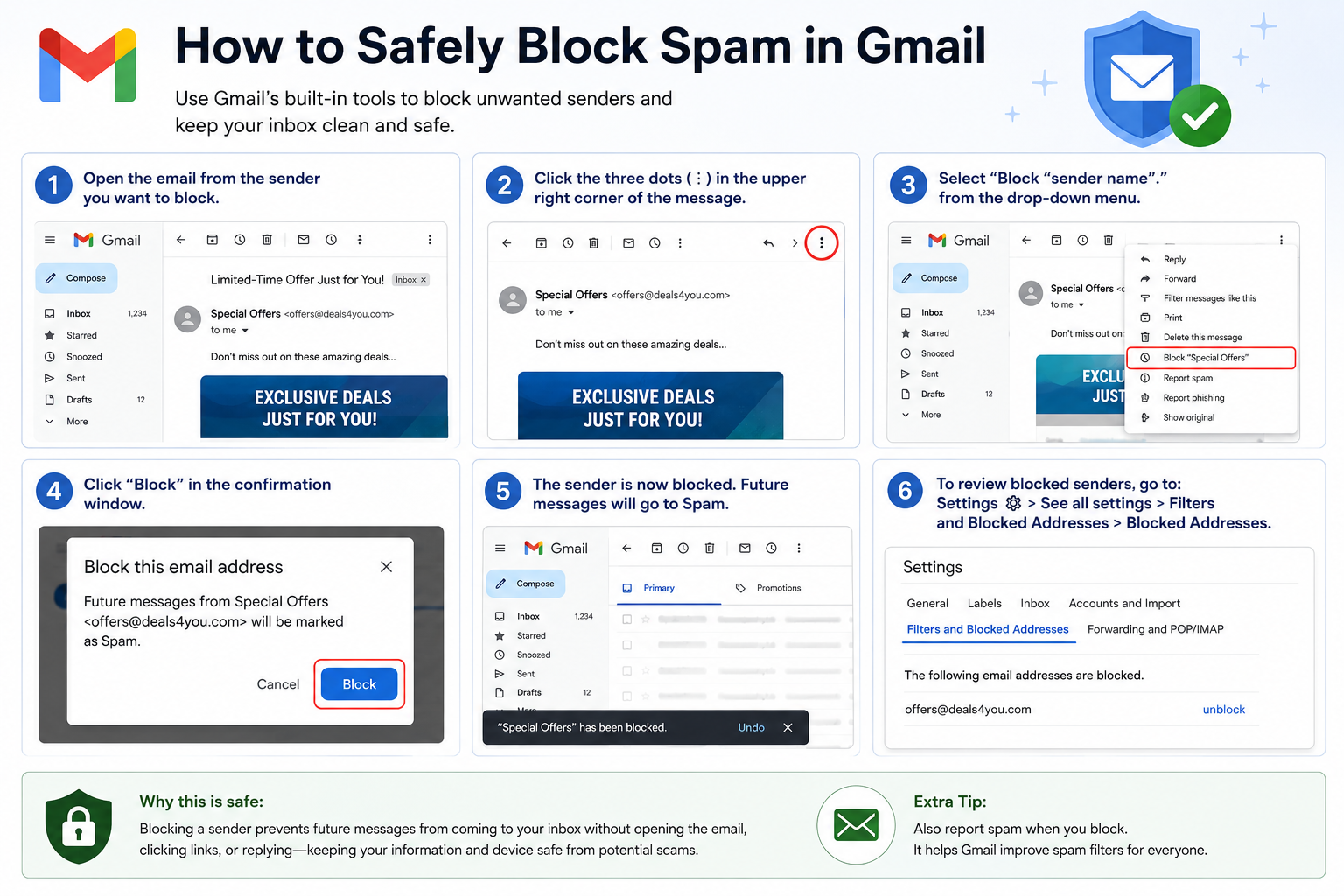
Most email providers, including Gmail, Outlook, Yahoo, and Apple Mail, include built-in tools to block unwanted senders. Instead of opening suspicious emails or clicking links inside them, use the Block or Report Spam option provided by your email service.

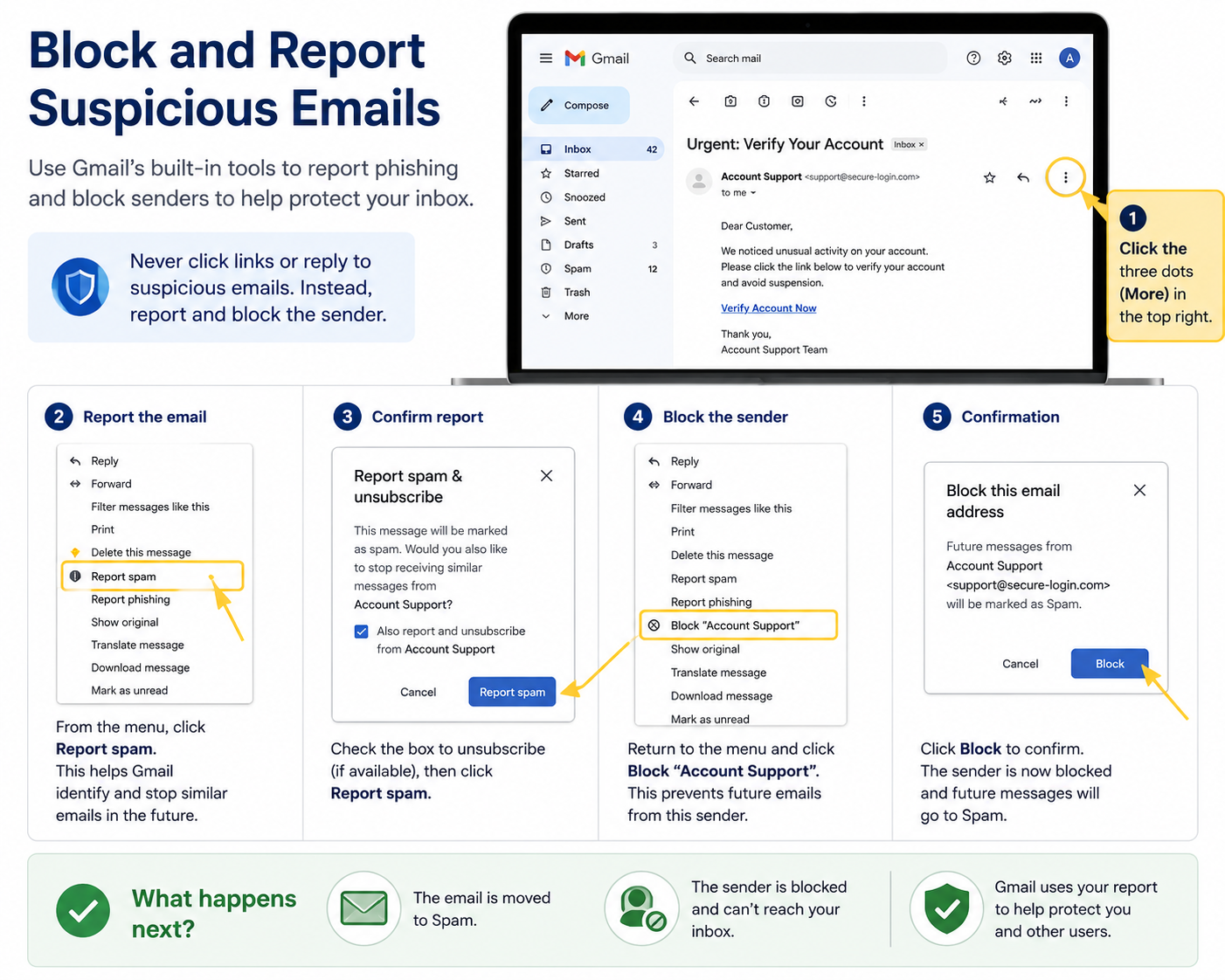
Blocking prevents future messages from reaching your inbox, while reporting spam helps improve your email provider’s ability to identify similar messages for everyone.

Never Reply to Spam Emails

Even if a message says, “Reply with REMOVE to stop receiving emails,” don’t do it.

Responding confirms that your email address is active and monitored by a real person. That information can be valuable to scammers, who may sell your address to other marketers or send even more unwanted messages.

If you don’t recognize the sender or weren’t expecting the email, the safest response is no response at all.

Report Spam to Train Filters

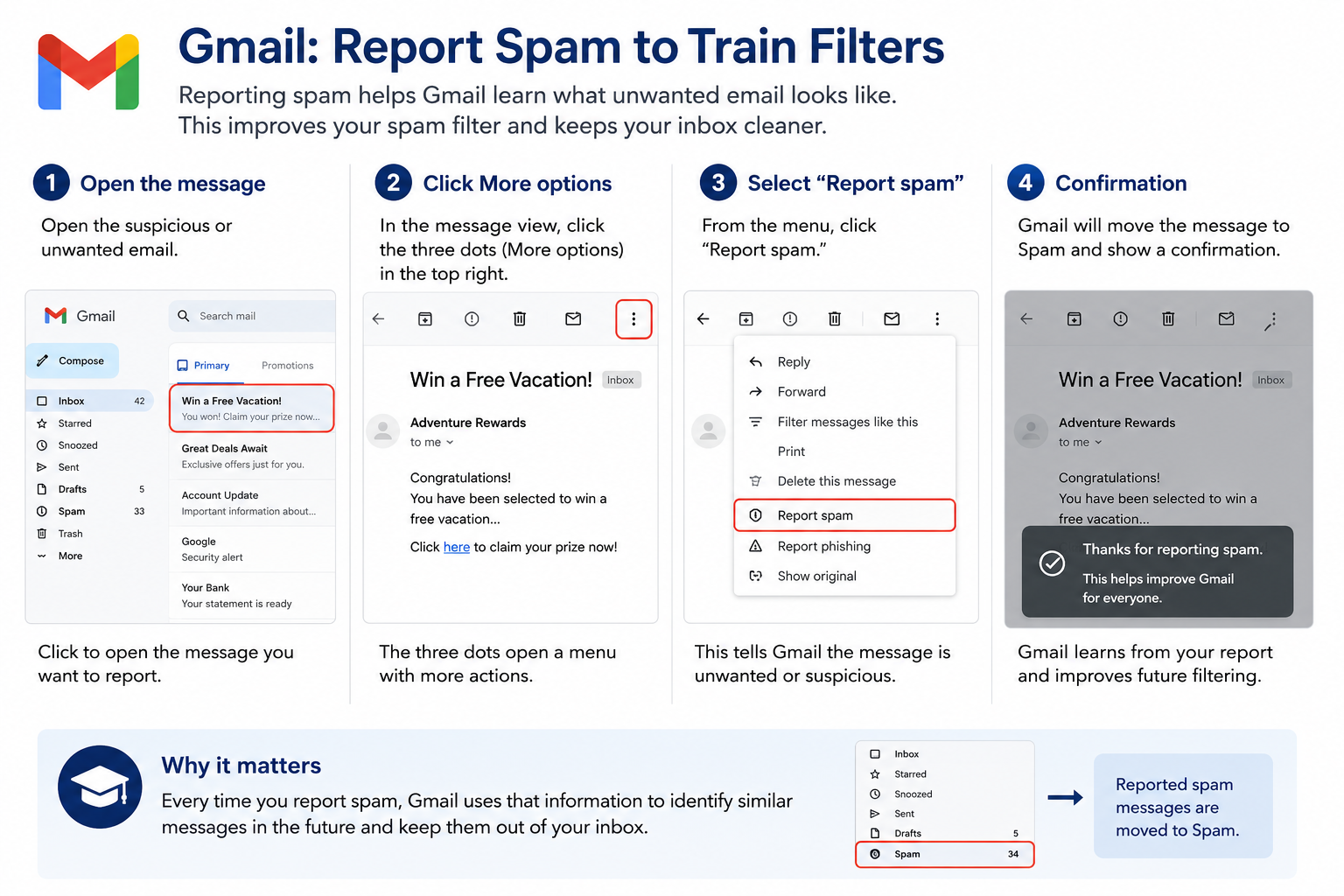
Every time you mark an unwanted email as spam, you’re helping your email provider improve its filtering system.

Spam filters use millions of reports from users to recognize patterns in fraudulent messages. Over time, fewer of these emails will reach your inbox.

Instead of simply deleting suspicious messages, take an extra second to click Report Spam or Junk. It’s one of the easiest ways to improve your inbox security.

Block and Report Suspicious Emails

Some emails are more than annoying—they’re dangerous.

Messages asking you to verify passwords, claim prizes, pay invoices you don’t recognize, or click urgent links may be phishing attempts designed to steal personal information.

If you receive one, report it as spam or phishing and block the sender immediately. Never click links, download attachments, or provide personal information unless you’re absolutely certain the message is legitimate.

When in doubt, contact the company directly using a phone number or website you already know—not the contact information provided in the email.

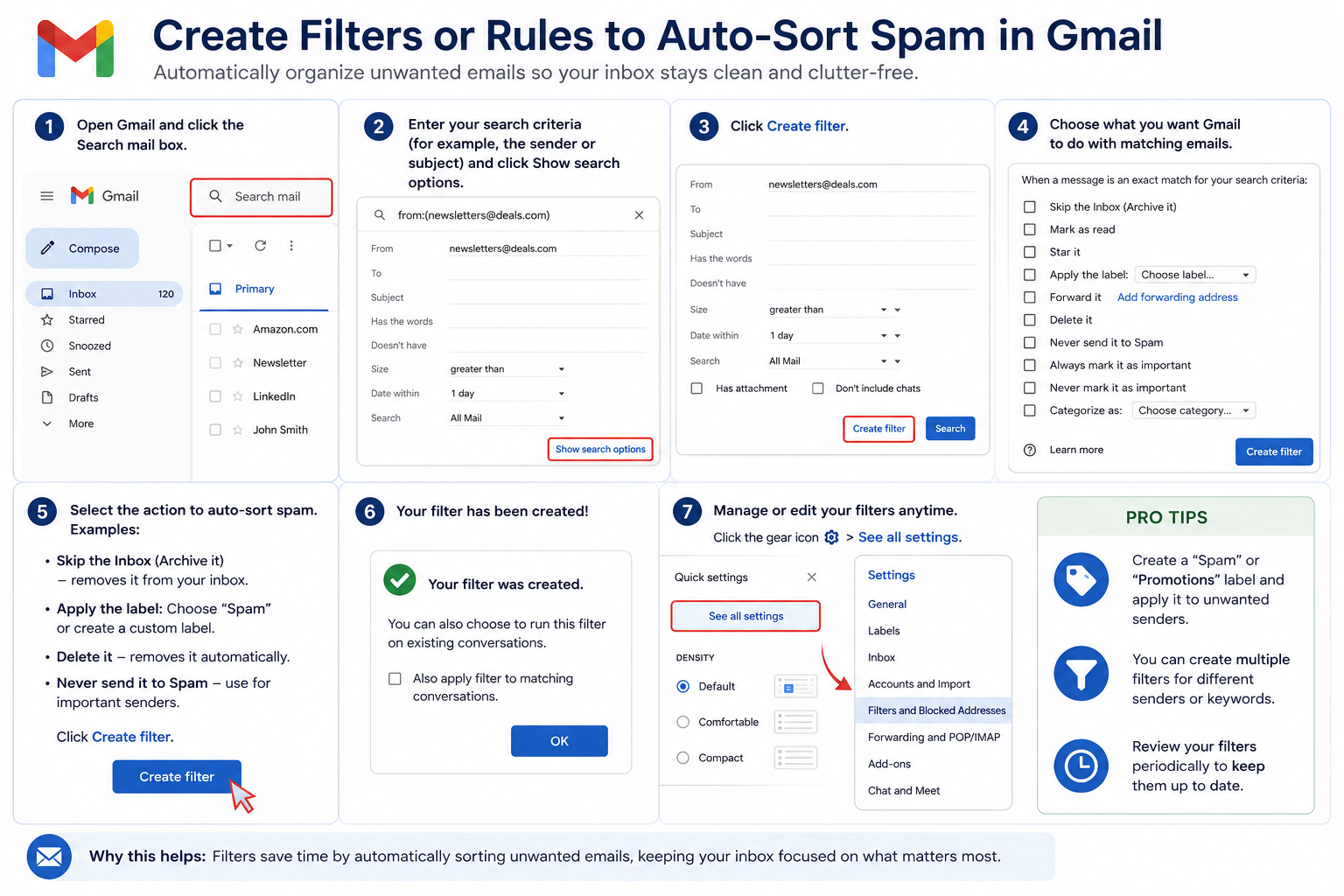
Create Filters or Rules to Auto-Sort Spam

Most email services allow you to create filters or rules that automatically move unwanted messages into a separate folder or delete them before they reach your inbox.

For example, if you repeatedly receive promotional emails from a particular sender, you can create a rule that automatically sends future messages to your Junk or Promotions folder.

These filters save time and keep your inbox organized without requiring you to handle the same unwanted messages repeatedly. Spending just a few minutes creating filters today can save hours of sorting through unwanted email over the course of a year.

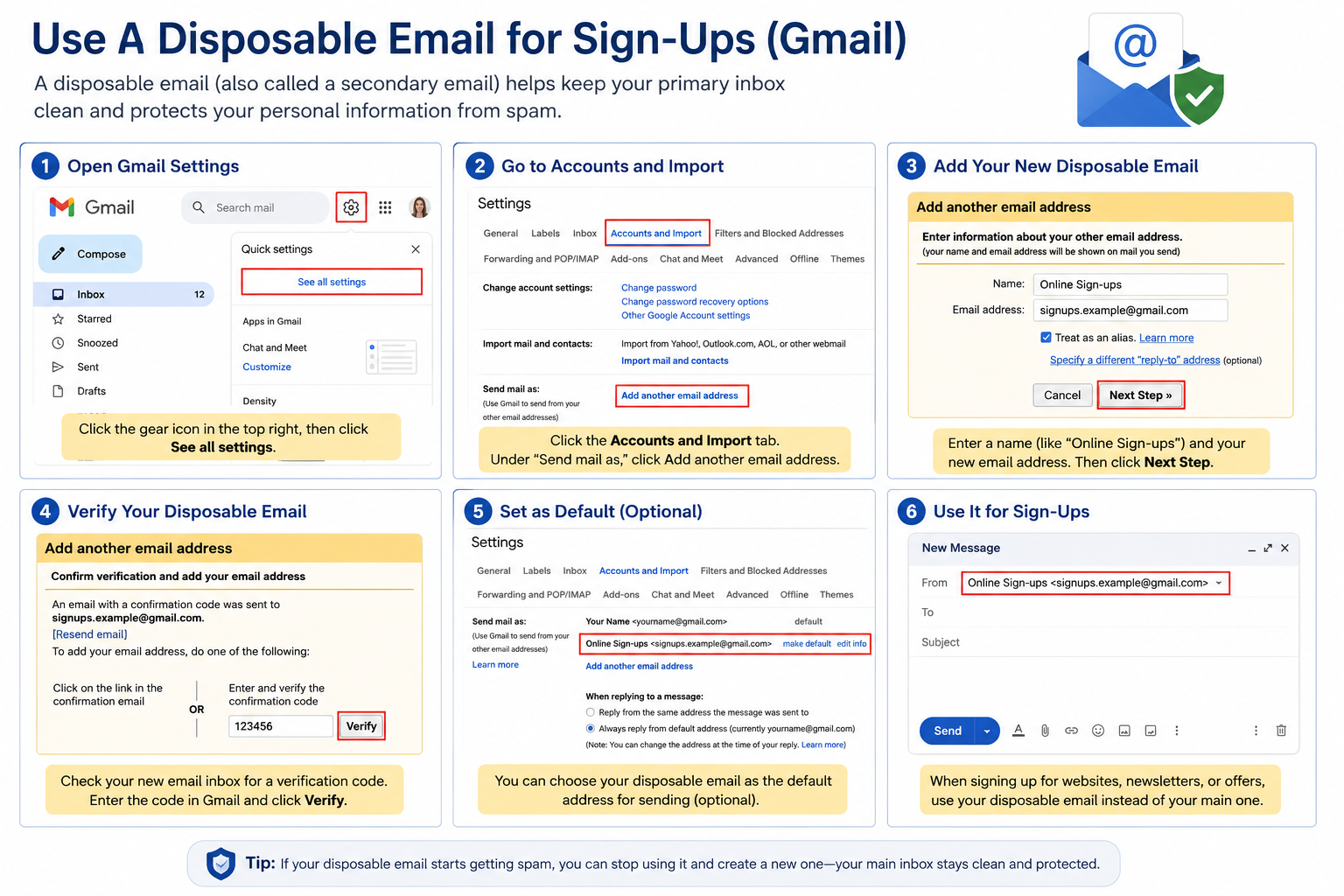
Use a Disposable Email for Sign-Ups

Many websites ask for an email address before allowing you to download coupons, enter contests, or receive special offers.

Instead of giving out your primary email address, consider creating a secondary email account used only for newsletters, online shopping, travel bookings, and registrations. If that address begins attracting spam, it won’t clutter your personal inbox.

A separate email account also makes it easier to identify which companies may have shared or sold your email address. If the secondary account becomes overloaded with unwanted messages, you can simply stop using it and create another one without affecting your primary communications.

Keeping your primary email reserved for family, friends, healthcare providers, banks, insurance companies, and trusted organizations makes it much easier to spot important messages and recognize suspicious emails that don’t belong.

A Safer Inbox Starts with Smart Habits

There is no way to eliminate spam completely, but you can dramatically reduce it by avoiding risky unsubscribe links, blocking suspicious senders, reporting spam, and using your email provider’s built-in security features.

Think of these habits as regular maintenance for your inbox. Just as you lock your front door and shred sensitive documents, managing unwanted email is another important step in protecting your personal information. The small amount of time you invest today can help prevent identity theft, phishing attacks, and unnecessary frustration in the future.

With the instructional images in this guide, you’ll see exactly where to click in Gmail to block, report, filter, and organize unwanted messages. By following these simple steps, you’ll spend less time sorting through junk mail and more time reading the messages that truly matter.

A few smart habits today can help keep your inbox cleaner, protect your personal information, and reduce your chances of becoming the target of an email scam.

A Message from the IT Team

Technology continues to change, and so do the scams that target older adults. That’s why the NCRO IT Team is committed to providing practical, easy-to-understand information that helps our Members use technology with confidence.

Our goal is simple: to share tips, tools, and step-by-step guidance that help keep you safe online, protect your personal information, and make technology work for you—not against you.

Whether you’re learning a new app, protecting your smartphone, or recognizing the latest email scam, we hope each newsletter gives you knowledge you can put to use right away.

Thank you for reading and for being part of the NCRO community. We look forward to bringing you more technology tips that help you stay connected, informed, and secure.

Stay safe online

Dale Koch
Chair, NCRO IT Team

01
Content Generated with AI...

...with Edits and Modifications

At NCRO, we are proud to uphold the highest standards of accuracy and quality in all our content. Our articles are meticulously crafted by advanced AI technology, rigorously reviewed, and approved by our dedicated NCRO committees before being shared on our website. This thorough process ensures that our readers receive reliable and credible information they can trust.
419 views
0 FacebookLinkedinCopy LinkEmail
Retirement gives many of us the freedom to enjoy life at a slower pace. Whether you’re reading, watching television, working on a computer, or relaxing with a favorite hobby, it’s easy to spend several hours each day sitting.
 
The problem is that too much sitting can quietly affect your health—even if you exercise regularly.
 

Research has shown that prolonged sitting is associated with an increased risk of heart disease, type 2 diabetes, obesity, poor circulation, back pain, and a gradual loss of strength and balance. The good news is that you don’t have to become a marathon runner to reduce these risks. Small changes throughout the day can make a meaningful difference.

Five Simple Ways to Sit Less and Move More

1. Stand Up Every 30 Minutes

Set a reminder on your smartphone, smartwatch, or kitchen timer to stand up every 30 minutes. Walk around the room, stretch, or simply stand for a minute or two before sitting back down.

2. Take a 10-Minute Walk After Meals
Walking after breakfast, lunch, or dinner is one of the easiest healthy habits to develop.

A short walk can:
If the weather isn’t ideal, simply walk around your home or visit a local shopping mall.
 
3. Let Technology Keep You Moving

Today’s smartwatches do much more than tell time. They can help you stay active throughout the day by tracking your steps, monitoring your heart rate, and encouraging you to reach daily movement goals.

Many models also include features such as:
These features don’t replace your healthcare provider, but they can help you become more aware of your daily activity and motivate you to move more often.
 
4. Include Strength and Balance Exercises
Maintaining muscle strength becomes increasingly important as we age.

Two or three times each week, practice simple exercises such as:
Improving strength and balance can help reduce the risk of falls and make everyday activities easier.
 
5. Make Movement Part of Your Routine
Choose activities you genuinely enjoy. Walking with a friend, gardening, dancing, swimming, or playing with grandchildren all count as physical activity.
Remember, movement doesn’t have to happen all at once. Several short walks and activity breaks throughout the day can be just as beneficial as one longer workout.
 
Small Changes Add Up
Retirement is the perfect time to enjoy life, but it shouldn’t mean spending most of the day sitting. By standing up more often, taking short walks, strengthening your muscles, and using technology such as a smartwatch to remind and encourage you to stay active, you can improve your health, maintain your independence, and continue doing the things you enjoy for years to come.
 
Your body was made to move—and sometimes a simple reminder on your wrist is all it takes to get started.
Dale Koch, Director
NCRO Aging Information Committee
01
Content Generated with AI...

...with Edits and Modifications

At NCRO, we are proud to uphold the highest standards of accuracy and quality in all our content. Our articles are meticulously crafted by advanced AI technology, rigorously reviewed, and approved by our dedicated NCRO committees before being shared on our website. This thorough process ensures that our readers receive reliable and credible information they can trust.
158 views
0 FacebookLinkedinCopy LinkEmail

Newsletters

by NCRO

NCRO IT TEAM NEWSLETTERS

NCRO NEWSLETTERS

10K views
0 FacebookLinkedinCopy LinkEmail

Fourth of July Weekend Update

by NCRO

Happening at NCRO

Stay connected. Stay informed. Stay secure.

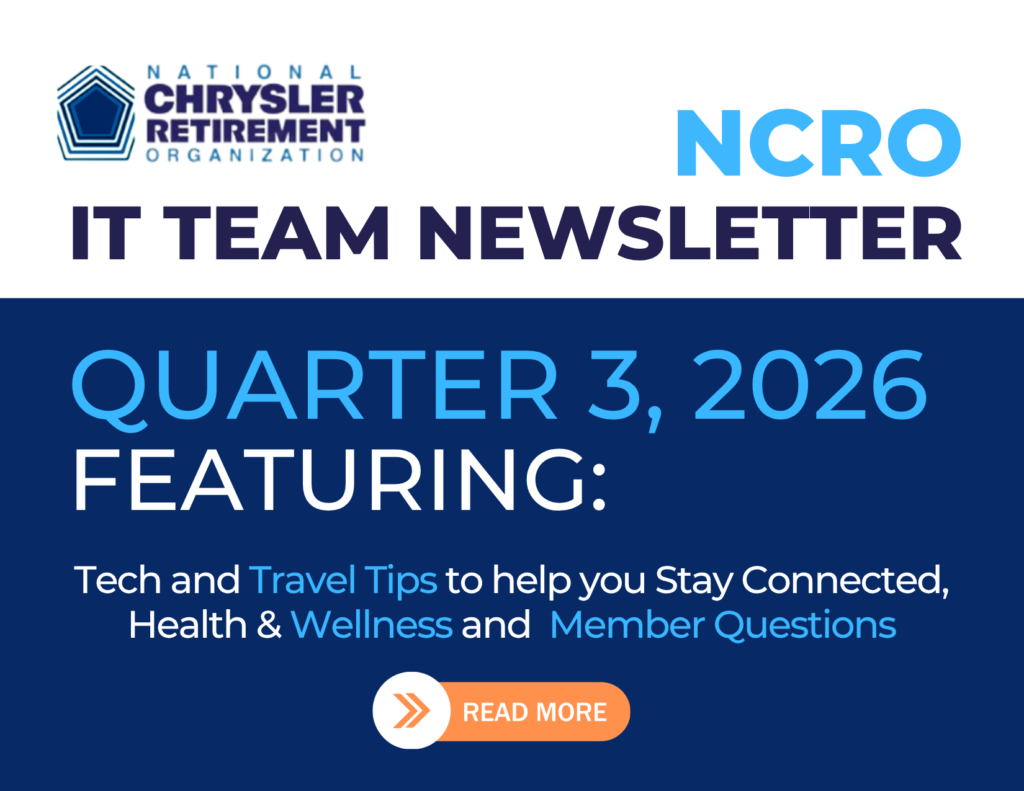
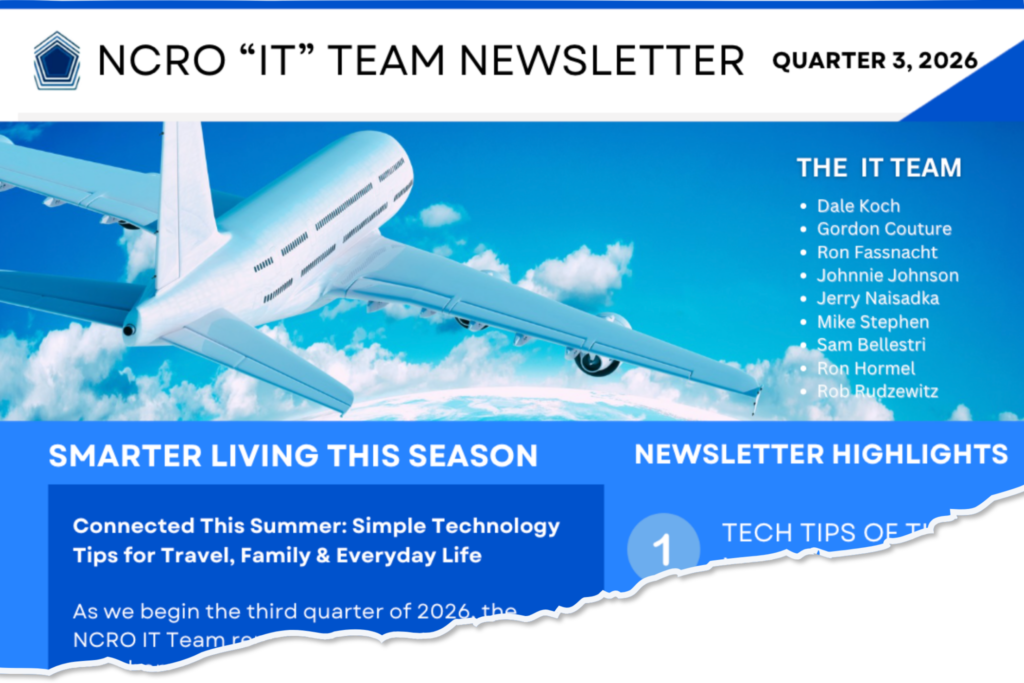
New IT Team Newsletter Quarter 3, 2026 is here!

Learn WhatsApp, FaceTime, Facebook video, and smartphone travel tips to stay connected and secure.

The latest NCRO IT Newsletter is now available, featuring easy-to-follow guides and practical tips created specifically for NCRO members.

This issue includes:

  • How to create and use WhatsApp to stay connected with family and friends
  • Using FaceTime and Facebook video messaging to share conversations and special moments
  • Smartphone travel preparation tips to help protect your device and stay connected while traveling
  • Cybersecurity reminders to help safeguard your personal information
  • Helpful answers to common technology questions from NCRO members

Whether you are learning a new app, preparing for your next trip, or looking for ways to stay connected with loved ones, the NCRO IT Team provides simple guidance to make technology easier.

22 views
0 FacebookLinkedinCopy LinkEmail

Tech Tips: How-To Guides for Staying Connected

Technology can help us stay connected with family and friends wherever life takes us. Whether you’re at home, visiting loved ones, or traveling this summer, the NCRO IT Team has created simple guides to help members confidently use today’s popular communication tools.

In this guide, you’ll learn how to:

  • Create a WhatsApp Account

Connect with family and friends through text messages, voice calls, and video calls—especially useful when traveling internationally.

  • Use FaceTime to Stay Connected

Learn how to make video and audio calls with other Apple users using your iPhone, iPad, or Mac.

  • Send Video Messages Through Facebook Messenger

Share vacation memories, family updates, and special moments through easy-to-send video messages.

Select a topic below for step-by-step instructions.

1. Preparing Your Smartphone for Domestic and International Travel

Before your trip, take a few minutes to prepare your smartphone:

Update your device

  • Install the latest software updates for your phone.
  • Update important apps, including your airline, hotel, banking, and navigation apps.
  • Updates often include important security improvements and new features.

Protect your information

  • Make sure your phone has a screen lock using a PIN, password, fingerprint, or Face ID.
  • Turn on “Find My Device” for Android phones or “Find My iPhone” for Apple devices in case your phone is lost.
  • Back up important photos, contacts, and documents before traveling.

Plan for international travel

  • Check with your mobile provider about international calling, texting, and data options before leaving.
  • Consider using Wi-Fi calling or travel plans to avoid unexpected charges.
  • Bring a charging cable, wall adapter, and portable battery if needed.

2. Using Translation Apps, Maps, and Travel Tools

Technology can make unfamiliar destinations easier to navigate.

Translation apps

  • Use translation apps to help communicate in another language.
  • Many apps allow you to download languages in advance so they work without internet access.
  • Voice translation features can help with conversations, menus, and directions.

Maps and navigation

  • Download offline maps before traveling so you can access directions without a data connection.
  • Save important locations such as your hotel, airport, and family addresses.
  • Use navigation apps to find restaurants, attractions, and transportation options.

Travel apps

  • Download airline and hotel apps for digital boarding passes, reservations, and updates.
  • Keep confirmation emails and travel documents organized in one location.

3. Staying Secure When Using Public Wi-Fi

Free Wi-Fi at airports, hotels, restaurants, and other public locations can be convenient, but it’s important to use caution.

Follow these safety tips:

  • Avoid accessing banking or financial accounts while connected to public Wi-Fi.
  • Do not enter passwords or personal information on unfamiliar websites.
  • Turn off automatic connections to unknown Wi-Fi networks.
  • Use your phone’s cellular connection when handling sensitive information.

Before connecting, ask:
“Is this network trusted, and do I really need to use it?”

A little preparation before you travel can help protect your personal information while allowing you to enjoy the convenience of today’s technology.

Safe travels from the NCRO IT Team!

WhatsApp is a free messaging app that allows you to send text messages, photos, videos, and make voice or video calls with family and friends around the world.

Steps to Get Started:

  1. Download WhatsApp
    • Open the App Store (iPhone) or Google Play Store (Android).
    • Search for WhatsApp Messenger.
    • Tap Install or Get.
  2. Create Your Account
    • Open WhatsApp.
    • Tap Agree & Continue.
    • Enter your mobile phone number.
    • Enter the verification code sent by text message.
  3. Set Up Your Profile
    • Add your name and a profile photo if desired.
    • Allow access to contacts so you can easily find family and friends who use WhatsApp.
  4. Start a Conversation
    • Tap the message icon.
    • Select a contact.
    • Send a message, photo, or video.
    • Tap the phone or video icon to make a call.

Helpful Tip: WhatsApp is especially useful when traveling internationally because it can work over Wi-Fi without traditional texting or calling charges.

FaceTime allows Apple users to make free audio and video calls with family and friends using an iPhone, iPad, or Mac.

Steps to Make a FaceTime Call:

  1. Open the FaceTime app on your Apple device.
  2. Tap New FaceTime.
  3. Enter the person’s name, phone number, or email address.
  4. Tap the Video button for a video call or the Audio button for a voice call.
  5. When finished, tap the red End Call button.

Helpful Tips:

  • Make sure FaceTime is turned on in Settings > FaceTime.
  • Use Wi-Fi when possible, especially while traveling.
  • Keep your device charged before making longer calls.

Before You Travel: Prepare Your Smartphone

Video messages are a fun way to share vacation memories, greetings, or updates with family and friends.

Steps to Send a Video Message:

  1. Open the Messenger app.
  2. Select the person or group you want to message.
  3. Tap the camera icon.
  4. Press and hold the record button to capture your video.
  5. Review your video.
  6. Tap Send.

Helpful Tip: Avoid sharing personal information such as your travel schedule, home address, or account details in public posts or messages.

Need help with technology?

The NCRO IT Team is here to help members stay connected, informed, and confident using today’s digital tools. If you have a question or topic you would like covered in a future newsletter, contact the IT Team.

194 views
0 FacebookLinkedinCopy LinkEmail

Retirement brings new opportunities, but it also requires staying organized. Important benefit information, healthcare records, and personal documents may not be needed every day — but having them available when questions arise can save time and provide peace of mind for you and your family.

Whether you are managing your own retirement information or helping a spouse or family member prepare for the future, keeping important documents in one secure location is a smart step.

The NCRO encourages retirees to review their records regularly and make sure trusted family members know where important information can be found.

Here are 10 important documents every Chrysler retiree should consider keeping:

Pension Information and Benefit Statements

Keep copies of pension statements, benefit summaries, and important correspondence related to your retirement benefits. These documents can help answer questions about your earned benefits and provide valuable records for your family.

Healthcare Benefit Information

Maintain records related to your healthcare coverage, including plan information, important contacts, and enrollment documents. Having this information organized makes it easier to address questions about coverage.

Benefit Connect Account Information

Keep your Benefit Connect login information and related account details in a secure location so you can access important benefit information when needed.

RHCA Information and Records

If you participate in a Retiree Health Care Account (RHCA), keep account statements, communications, and related documentation available for future reference.

Medicare Documents

Save Medicare cards, enrollment information, notices, and other healthcare documents. These records can be especially important during coverage changes or annual reviews.

Survivor and Beneficiary Information

Review beneficiary designations and keep copies of important survivor-related documents. Making sure this information is current can help your loved ones during an already difficult time.

Important Contact Information

Maintain a current list of phone numbers, websites, and contacts for NCRO, benefit providers, insurance plans, and other organizations connected to your retirement.

Tax and Financial Records

Keep tax documents, retirement income records, and financial information organized so you or your family can locate them when needed.

Legal Documents

Store copies of wills, trusts, powers of attorney, and other important legal documents in a secure location.

Personal Identification Records

Keep copies of important identification documents, including Social Security information and other records your family may need.

Taking a little time now to organize retirement paperwork can make a big difference later. Clear records help ensure that you, your spouse, and your family can find important information when it matters most.

Explore NCRO Survivor Resources

Need help preparing your family for the future? Visit the NCRO Survivor Resources page for helpful information and guidance designed to help retirees and their loved ones navigate important next steps.

Survivor Resources
01
Content Generated with AI...

...with Edits and Modifications

At NCRO, we are proud to uphold the highest standards of accuracy and quality in all our content. Our articles are meticulously crafted by advanced AI technology, rigorously reviewed, and approved by our dedicated NCRO committees before being shared on our website. This thorough process ensures that our readers receive reliable and credible information they can trust.
249 views
1 FacebookLinkedinCopy LinkEmail
Newer Posts
National Chrysler Retirement Organization
The NCRO is open to all non-union Chrysler retirees and spouses, surviving spouses and employees.

This website uses cookies to improve your experience. We'll assume you're ok with this, but you can opt-out if you wish. Accept Read More